Behind the Plaster: What Insulation Can and Cannot Fix
Insulation can slow heat moving through a building, but it cannot correct every draft, damp patch, or awkward construction detail. Learn how to sort the symptoms before choosing an upgrade.
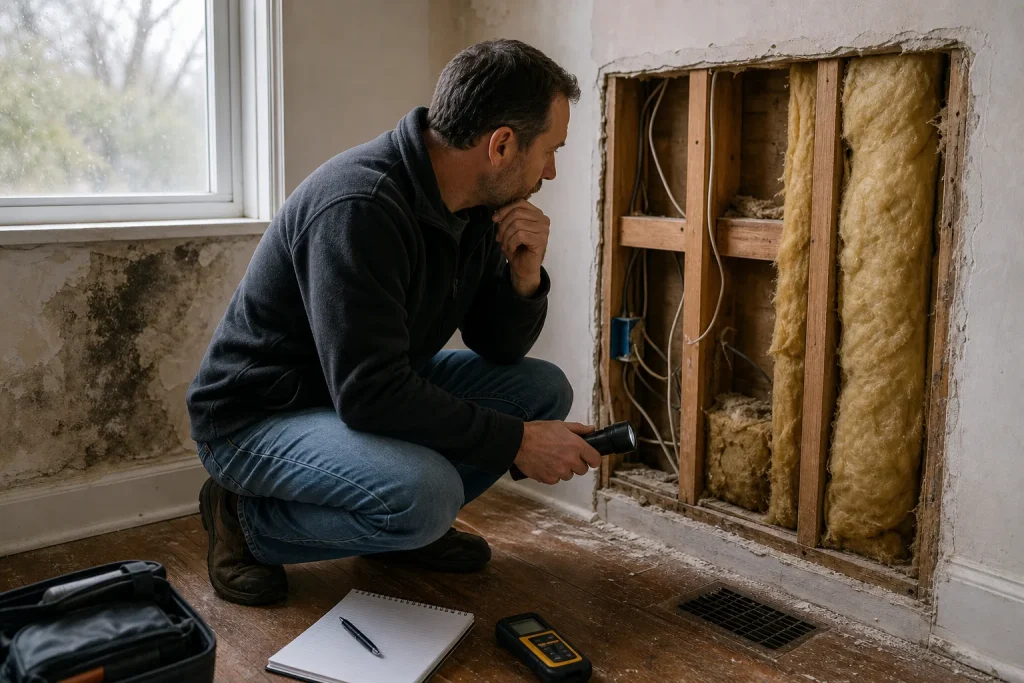
You turn up the thermostat, but the room still feels chilly beside the outside wall. A contractor mentions insulation; someone else points to a damp mark near the window. Both may be relevant, but insulation is not a general-purpose repair material. It slows heat moving through the parts of a building that separate warm and cool spaces. It does not, by itself, stop water, seal every air leak, or correct poor workmanship.
Before opening a wall or filling a cavity, work out what problem you are trying to solve. The order matters: adding insulation over a leak or into a wall that cannot dry can make a small defect harder to see and more costly to address.
What is insulation actually meant to fix?
Insulation resists heat transfer through a wall, roof, floor, or other building element. It can help a room lose heat more slowly in cold weather and limit heat entering through the same element in warm weather. The result depends on the whole assembly: materials, gaps, framing, air movement, and how the construction handles moisture.
It is not the same as air sealing. Air sealing closes unintended routes that let outside air pass through cracks and joints. Insulation can reduce heat flow through a cavity while leaving a gap around a pipe or window frame untouched. Conversely, a well-sealed but poorly insulated wall may still transfer heat readily. The two jobs often belong in the same plan, but one does not automatically do the other.
Insulation also cannot repair a roof leak, a failed window seal, or a plumbing problem. Nor can it make a poorly balanced heating system distribute warmth evenly. If the complaint is confined to one room, look at the room’s heating, doors, windows, and building details before assuming the entire wall needs filling.
Why can a draft remain after insulation?
A draft usually points to air moving through a gap, not heat passing through a solid surface. Common routes include the edges of windows and exterior doors, gaps around pipes and cables, attic hatches, and joints between building materials. Insulating a wall cavity may leave every one of those routes open.
Try to locate the air path before choosing a fix. On a breezy day, move a hand slowly around likely joints; a smoke pencil can make air movement easier to see, but use it cautiously and follow its instructions around smoke alarms, flames, and sensitive occupants. Do not use an open flame. Check whether the movement comes from a window or door that needs adjustment, a worn weatherstrip, or a gap that needs an appropriate sealant.
Some air movement is deliberate. Exhaust fans and other ventilation openings serve a purpose, and blocking them can create moisture or indoor-air problems. If the source is unclear, ask a qualified insulation or building professional to distinguish unintended leakage from necessary ventilation. Filling every visible opening is not a sound diagnostic method, though it is a popular way to make future troubleshooting more interesting.
What if the wall is damp or smells musty?
Pause the insulation plan and find the moisture source. Water can enter from a damaged roof, leaking plumbing, failed flashing, or an exterior wall that sheds rain poorly. Moist indoor air can also condense on cold surfaces when it reaches them. Those causes need different repairs, and insulation alone does not resolve any of them.
Look for changes after rain, staining around openings, peeling paint, soft or crumbling material, and persistent musty odors. These clues can help focus an inspection, but they do not establish the cause. Avoid covering a damp area with new insulation or a finish layer. Concealment may make it harder to detect continued water entry, while trapped moisture can damage wood and other materials.
First stop active leaks and correct the underlying defect. Then have the affected assembly assessed and allowed to dry as appropriate before deciding on insulation. If the area is extensive, the material is deteriorating, or the source is uncertain, consult a qualified building professional. Mold or other health concerns call for appropriate professional advice rather than a guess based on appearance.
Why does the wall construction change the answer?
Walls that look alike from inside can behave differently behind the plaster. A cavity wall, a solid masonry wall, a framed wall, and an older wall with irregular materials do not all accept the same insulation method. The location of existing layers, exterior finishes, and routes for drying all affect whether an upgrade is suitable.
Adding insulation can make some surfaces colder. If moisture can reach that colder area and cannot dry away, condensation may follow. The risk depends on the full assembly and local conditions, so a generic product recommendation cannot settle the question. The installer needs to know what is already present and how the wall manages rain and indoor moisture.
Access is another constraint. Dense wiring, pipes, obstructions, fragile plaster, and narrow or interrupted cavities can make uniform installation difficult. Filling a cavity is not useful if sections are missed, material is poorly distributed, or the work damages services. Ask how the contractor will inspect the cavity, protect wiring and pipes, identify obstructions, and confirm that the chosen method suits the existing construction.
What should you try, in what order?
- Describe the symptom. Note where and when the room feels uncomfortable, whether the issue changes with wind or rain, and whether there is dampness, odor, or visible damage. Keep the observation factual rather than assigning a cause.
- Check for active moisture. Look for leaks, staining, damaged exterior finishes, and plumbing problems. Address suspected water entry before adding insulation, and seek professional assessment if the source is not clear.
- Check obvious air paths. Inspect window and door seals, pipe penetrations, attic access, and visible joints. Repair suitable gaps without blocking vents or other intended airflow.
- Identify the construction. Find out whether the wall is framed, cavity, or solid, and whether insulation is already present. Building records, a careful inspection, or a qualified contractor can help; do not assume the interior finish tells the whole story.
- Ask how the assembly will dry. Request an explanation of how the proposed material and installation method suit the wall, its exterior finish, and any existing layers. A confident sales pitch is not a moisture assessment.
- Agree on access and inspection. Clarify how hidden services and obstructions will be handled, what parts of the wall will be opened or repaired, and how completed work will be checked before the finish is restored.
Say you notice a musty odor below a window after heavy rain, and a contractor proposes filling the wall cavity. You first check the window’s exterior trim and find a gap where rain may be entering. The sensible next move is to have that detail assessed and repaired, then let the wall dry and review the insulation plan. The expected observable result is that the dampness stops returning; only then can you judge whether insulation is still needed. Filling first would confuse two separate jobs.
Which details are not worth the effort?
It is not useful to buy insulation based only on a label or to seal every opening you can reach. Nor does opening a finished wall merely to confirm a hunch make sense when a qualified inspection can establish what is there with less disruption. Focus on the symptom, moisture source, construction, and proposed installation method. If those remain unknown, postpone the upgrade rather than asking plaster to keep a secret.
When you speak with an installer, ask for the diagnosis as well as the product recommendation: what is causing the problem, what the proposed work will change, and what it will leave untouched. A good insulation plan is specific about those limits. That makes it easier to decide whether the work addresses your actual complaint or merely gives it a new layer to hide behind.